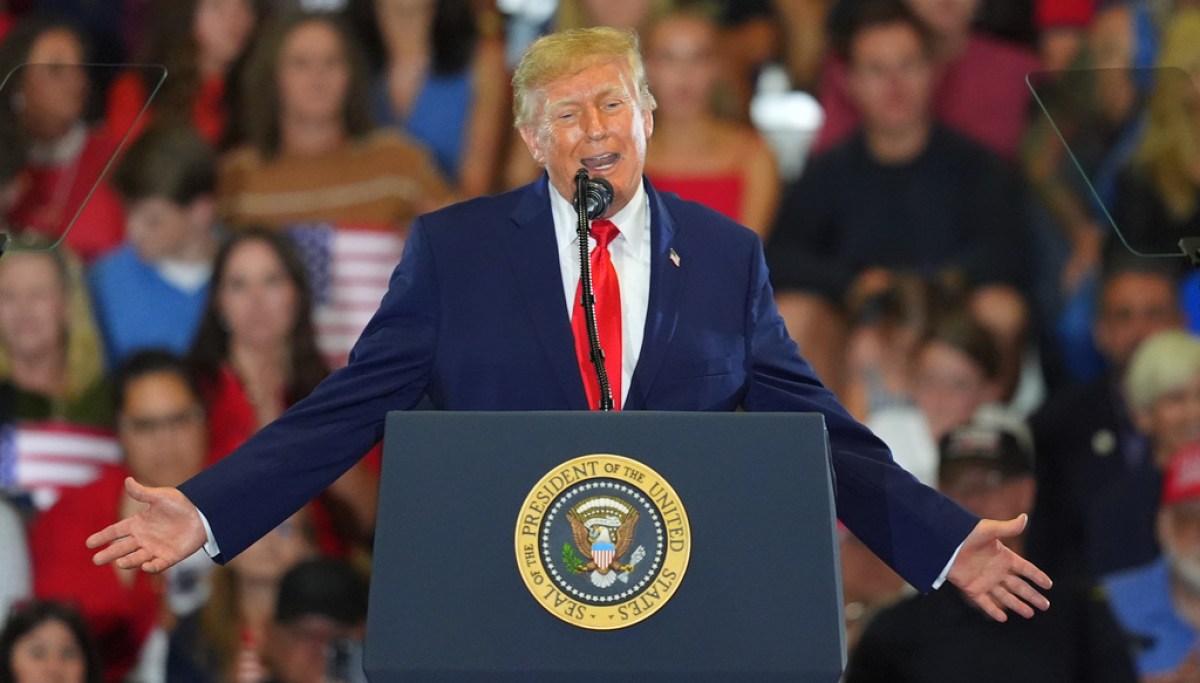
Trump's Iran "Deal"

Arthur Brain

Well-known member
Well I can't force you not to think of the situation in Iran solely in terms of Trump's popularity or oil prices in the US. But it does seem a bit ironic to me that that is what you are doing. Apparently, you don't seem to think so.

Well, you wouldn't be able to force someone to stop doing something they aren't doing anyway.

Get a new, and preferably relevant, soundbite.
 

JudgeRightly

裁判官が正しく判断する
Staff member
Administrator
Super Moderator
Gold Subscriber
Iran weren't posing a nuclear threat at all so that's moot.

Not anymore they aren't, at least not to the extent they were.

their nuclear potential had been obliterated

Because Trump frequently uses hyperbole and superlatives when describing his accomplishments.

The fact remains that the strikes badly damaged Iran's nuclear infrastructure and set its program back. “Obliterated” was Trump being Trump.

why did he start this war - that's now been going on for over half a year?

Those are really two different questions.

Why did it start?

The U.S. and Iran were negotiating, but they remained divided over major issues, particularly Iran's uranium enrichment, ballistic missiles, and support for armed groups in the region.

And there was a reason for the nuclear demands: Iran acquiring nuclear weapons would dramatically increase the threat it could pose to the region. Preventing Iran from acquiring a nuclear weapon was one of the stated U.S. objectives. Iran, meanwhile, would not accept the U.S. demand to end uranium enrichment and ship its enriched uranium abroad.

The negotiations failed to resolve those differences, and the military campaign followed.

Why has it dragged on for so long?

Because Iran is fighting asymmetrically.

A nuclear site is a big, fixed target. You know where it is, so you can bomb it.

Asymmetric warfare is different. Missiles, drones, small boats, mines, and mobile launchers can be scattered, hidden, moved around, and replaced.

And Iran doesn't have to defeat the United States militarily.

It only has to maintain enough pressure on U.S. interests and international commerce to make continuing the conflict increasingly costly and gain bargaining leverage.

The United States has the much harder job. It has to protect naval vessels, bases, tankers, freighters, ports, supply routes, and the enormous amount of international commerce passing through the region.

Iran only needs enough missiles, drones, mines, boats, and launchers left to keep causing trouble.

The U.S. has to find and stop them.

That's the asymmetry.

Destroying a major fixed facility can happen relatively quickly. Finding and suppressing every small, mobile threat while simultaneously defending everything those threats can attack can take months or even years.

That's why a much stronger military like ours can still be tied up for a long time by a much weaker opponent like Iran.

Iran doesn't have to defeat us. It only has to keep imposing enough costs that we eventually decide the fight isn't worth continuing.

The problem for the U.S. is that simply walking away doesn't resolve the underlying dispute. Iran still rejects the restrictions the U.S. is demanding on its nuclear program. So withdrawing without some settlement could leave Iran free to rebuild the capabilities the U.S. went to war to restrict in the first place.

Surely, at the very least, you can recognize why Iran having nukes is bad, yes?
 

Arthur Brain

Well-known member
Not anymore they aren't, at least not to the extent they were.

They weren't posing any threat when Trump started his stupid and illegal war. We're now in the seventh month and with no forseeable end in sight, despite Trump's blatherings that it would be over quickly. So you, and every other American citizen are paying the fallout from it. I mean, be honest JR, you can't be happy with the price of gas right now, surely?

Because Trump frequently uses hyperbole and superlatives when describing his accomplishments.

The fact remains that the strikes badly damaged Iran's nuclear infrastructure and set its program back. “Obliterated” was Trump being Trump.

Oh, so when he said that 'Operation Midnight Hammer' successfully resulted in the "complete and total obliteration of Iran's nuclear capabilities" he was exaggerating? That's pretty convenient. So when does Trump mean what he actually says then? He also pledged not to start any foreign wars...

Those are really two different questions.

Why did it start?

The U.S. and Iran were negotiating, but they remained divided over major issues, particularly Iran's uranium enrichment, ballistic missiles, and support for armed groups in the region.

And there was a reason for the nuclear demands: Iran acquiring nuclear weapons would dramatically increase the threat it could pose to the region. Preventing Iran from acquiring a nuclear weapon was one of the stated U.S. objectives. Iran, meanwhile, would not accept the U.S. demand to end uranium enrichment and ship its enriched uranium abroad.

The negotiations failed to resolve those differences, and the military campaign followed.

Why has it dragged on for so long?

Because Iran is fighting asymmetrically.

A nuclear site is a big, fixed target. You know where it is, so you can bomb it.

Asymmetric warfare is different. Missiles, drones, small boats, mines, and mobile launchers can be scattered, hidden, moved around, and replaced.

And Iran doesn't have to defeat the United States militarily.

It only has to maintain enough pressure on U.S. interests and international commerce to make continuing the conflict increasingly costly and gain bargaining leverage.

The United States has the much harder job. It has to protect naval vessels, bases, tankers, freighters, ports, supply routes, and the enormous amount of international commerce passing through the region.

Iran only needs enough missiles, drones, mines, boats, and launchers left to keep causing trouble.

The U.S. has to find and stop them.

That's the asymmetry.

Destroying a major fixed facility can happen relatively quickly. Finding and suppressing every small, mobile threat while simultaneously defending everything those threats can attack can take months or even years.

That's why a much stronger military like ours can still be tied up for a long time by a much weaker opponent like Iran.

Iran doesn't have to defeat us. It only has to keep imposing enough costs that we eventually decide the fight isn't worth continuing.

The problem for the U.S. is that simply walking away doesn't resolve the underlying dispute. Iran still rejects the restrictions the U.S. is demanding on its nuclear program. So withdrawing without some settlement could leave Iran free to rebuild the capabilities the U.S. went to war to restrict in the first place.

Surely, at the very least, you can recognize why Iran having nukes is bad, yes?

It started because Trump needed a diversion away from domestic issues, primarily the Epstein files - bit it's backfired spectacularly, hence his dismal approval ratings. Most Americans didn't and don't want this war. Maybe he stupidly thought Iran would be an easy prospect and as you've said, even the might of America's military doesn't equate to a quick win. This could drag on for another seven months and just what has been accomplished exactly?

Of course I don't want to see Iran with nukes, but then that was just an erroneous excuse for Trump to start this ongoing debacle in the first place. Come the midterms - and probably even now - he'll regret it.
 

Arthur Brain

Well-known member
Eh? So now the factories hit in Operation Midnight Hammer were nuclear - and drug?!

Bizarre...

The B-2 stealth bombers “unloaded every single bomb, went right down the air chutes into these drug factories really,” Trump said. “That’s what they were doing. They were nuclear and drug. They were doing drugs, but they were doing the nuclear. But these drug factories/nuclear factories were hit so hard.”


JudgeRightly

裁判官が正しく判断する
Staff member
Administrator
Super Moderator
Gold Subscriber
They weren't posing any threat when Trump started his stupid and illegal war.

That's too absolute a claim.

U.S. intelligence did not publicly establish that Iran was about to launch an imminent attack when the war began, but that is not the same as Iran posing no threat. Iran still had enrichment capability, ballistic missiles, regional armed partners, and other military capabilities.

We're now in the seventh month and with no forseeable end in sight, despite Trump's blatherings that it would be over quickly.

Yes, and a large part of that is the nature of asymmetric warfare.

Iran doesn't have to defeat the United States conventionally. It only has to retain enough missiles, drones, mines, mobile launchers, and other capabilities to keep imposing costs and creating disruption.

The U.S., meanwhile, has to keep protecting ships, bases, supply routes, and commercial traffic while trying to locate and suppress those dispersed threats.

That's why overwhelming conventional superiority doesn't necessarily produce a quick end to this kind of conflict.

So you, and every other American citizen are paying the fallout from it. I mean, be honest JR, you can't be happy with the price of gas right now, surely?

Of course not. But let's not lay 100% of the blame squarely on the US government.

Iran is deliberately using the Strait of Hormuz and the threat to commercial shipping as economic leverage. Disruption and uncertainty there constrain energy flows and add a substantial risk premium to oil and fuel prices.

So yes, the war is a major reason we're paying more at the pump. But Iran's actions in and around Hormuz are part of the reason the economic fallout is as severe as it is.

In other words, Iran is partly to blame for gas prices being so high, due to their actions, in and around the Strait of Hormuz, but you seem to only want to focus on my government's actions, unfairly so. I have yet to see you condemning Iran whenever you talk about this issue.

Oh, so when he said that 'Operation Midnight Hammer' successfully resulted in the "complete and total obliteration of Iran's nuclear capabilities" he was exaggerating? That's pretty convenient. So when does Trump mean what he actually says then? He also pledged not to start any foreign wars...

Yes, I've already acknowledged that Trump exaggerated.

What he actually said after Midnight Hammer was that Iran's key nuclear enrichment facilities had been “completely and totally obliterated.” The evidence supports severe damage to those facilities and substantial disruption of Iran's enrichment program, but not the literal destruction of every element of Iran's nuclear capability.

That's why I'm not basing my argument on Trump's choice of adjective. I'm basing it on what the strikes actually accomplished.

As for “no new wars,” that's a fair criticism. Trump repeatedly campaigned on a “no new wars” message and portrayed himself as the candidate who would keep the United States out of new conflicts.

That doesn't change the separate factual questions of what Iran's nuclear capabilities were, what the U.S. was demanding in negotiations, or why the present conflict has continued.

It started because Trump needed a diversion away from domestic issues, primarily the Epstein files

Speculation. The publicly stated reasons concerned Iran's nuclear program, missiles, navy, and regional proxies. If you're claiming Epstein was the real motive, you need evidence for that.

but it's backfired spectacularly, hence his dismal approval ratings. Most Americans didn't and don't want this war.

The war is unpopular and has hurt Trump politically. That's fair. But his approval ratings aren't determined by one issue; high living costs, especially fuel prices, are also a major factor.

Maybe he stupidly thought Iran would be an easy prospect

Maybe, but that's speculation too unless there's evidence that's what he actually believed.

just what has been accomplished exactly?

Quite a lot, actually. Iran's missile and drone arsenal, navy, air force, and air defenses have all suffered substantial losses. Reuters reported that about a third of its missile arsenal had been confirmed destroyed, with another large portion damaged or buried, while its conventional military capability was substantially degraded.

What remains unresolved is the larger strategic objective: Iran still hasn't accepted the nuclear restrictions the U.S. wants.

"Nothing has been accomplished" isn't accurate. The better question is whether those military gains will ultimately produce the settlement my government is seeking.

Of course I don't want to see Iran with nukes,

Then the nuclear issue wasn't moot. You can argue that war wasn't the proper response, but you've just acknowledged that preventing Iran from acquiring nuclear weapons is a legitimate concern.

but then that was just an erroneous excuse for Trump to start this ongoing debacle in the first place. Come the midterms - and probably even now - he'll regret it.

Except that restricting Iran's enrichment capability was one of the central U.S. demands, and Iran refused the demand for zero enrichment. That's precisely one of the major issues the negotiations had failed to resolve before the war began.

 

JudgeRightly

裁判官が正しく判断する
Staff member
Administrator
Super Moderator
Gold Subscriber
Eh? So now the factories hit in Operation Midnight Hammer were nuclear - and drug?!

Bizarre...

The B-2 stealth bombers “unloaded every single bomb, went right down the air chutes into these drug factories really,” Trump said. “That’s what they were doing. They were nuclear and drug. They were doing drugs, but they were doing the nuclear. But these drug factories/nuclear factories were hit so hard.”


Iran having nukes is bad, m'kaaay?

And regardless of whether they were also making drugs there too, drugs produced by terrorists and/or hostile regimes are bad too.
 
Top