Constitutional Monarchy

Clete

Truth Smacker
Silver Subscriber
If judges have final say over whether the king remains king, then they are sovereign over the kingship, whatever else you may call it.
Once again, this would only be so if the judges wrote the law or could remove the king by fiat. If all they are doing is performing a legal duty then it is not the men but the law that is removing the king by the same authority by which it also seated him.

They may not be sovereign over every royal function, but they are sovereign over his continued possession of the office.
Only if they are the source of the law, which they are not.

That's the contradiction I've been trying to point out to you this entire time.
It is not a contradiction. Your idea of how the law works, which is to say your understanding of what the rule of law means is faulty.

You cannot have your cake and eat it too.

It's one or the other.
Yeah, well, we live in a country right now that demonstrates that your all or nothing stance is a false dichotomy. This country has existed with a separation of powers that are each designed to limit and check the other branches of government - and it works. It's far away from perfect but it has demonstrated over a dozen or more generations that it does, in fact, work. The Congress can remove the President but it has failed to do so even once and that's with the Congress having the power to write new law. How much harder would it be for a sitting, but unpaid, non-political judge who cannot write new law to wield sufficient sway over a king by virtue of the mere threat of a legal proceeding that is not guaranteed to remove him from office, especially if the charges are trumped up?
 

JudgeRightly

裁判官が正しく判断する
Staff member
Administrator
Super Moderator
Gold Subscriber
Once again, this would only be so if the judges wrote the law or could remove the king by fiat. If all they are doing is performing a legal duty then it is not the men but the law that is removing the king by the same authority by which it also seated him.


Only if they are the source of the law, which they are not.


It is not a contradiction. Your idea of how the law works, which is to say your understanding of what the rule of law means is faulty.


Yeah, well, we live in a country right now that demonstrates that your all or nothing stance is a false dichotomy. This country has existed with a separation of powers that are each designed to limit and check the other branches of government - and it works. It's far away from perfect but it has demonstrated over a dozen or more generations that it does, in fact, work. The Congress can remove the President but it has failed to do so even once and that's with the Congress having the power to write new law. How much harder would it be for a sitting, but unpaid, non-political judge who cannot write new law to wield sufficient sway over a king by virtue of the mere threat of a legal proceeding that is not guaranteed to remove him from office, especially if the charges are trumped up?

Are judges and kings under the law?
 

Clete

Truth Smacker
Silver Subscriber
Are judges and kings under the law?
They should be. The king is not under the law in the proposed constitution, except in theory and only barely that, it seems. The population is left to wait out the life span of a rogue king and just hope that his heir isn't as bad or worse.
 

JudgeRightly

裁判官が正しく判断する
Staff member
Administrator
Super Moderator
Gold Subscriber
Asked and answered.

No, it wasn't.

You're making this way more difficult than it has to be. It's a simple yes or no question about your principles.

Fine, different question: are the king and the judges coordinate offices under the law, each with distinct authority and jurisdiction?

In other words, neither office is inherently above the other, correct?
 

Idolater

Popetard
... those things are just the monarch's grunt work anyway. That's the work nobody else CAN do, it HAS to be him. It doesn't make any sense for anybody else to do those tasks and have those responsibilities, just him, the monarch. And there's no glamor in it either, it's hard work, thankless work, long work. None of it's fun. It's work. And somebody has to do it. And skubalon flows downhill, and that's where he is. He's at the bottom of the hill when it comes to responsibilities and duties, as the monarch.

Under Enyart's proposal, the king ought to look haggard and tired all the time, from working so much. Hopefully he doesn't need much sleep, to be completely refreshed, because otherwise, we pity his existence. He won't be able to ever really take a vacation, or even a weekend off from his nonstop duties. He's going to need his sleep, and he's not going to be able to get it.

He'll have servants tending to his every physical need, but that's still not going to buy him sleep, and he's still going to be working his fingers to the bone, administratively. Whatever his psychological bandwidth is, will be completely consumed 100% of the time by his responsibility as monarch, under Enyart's proposal. It's not a cushy job at all. We pity him, his subjects. We pray for him, and hope he does a good job, but we pity him. Under Enyart's proposal.
 

Clete

Truth Smacker
Silver Subscriber
No, it wasn't.

You're making this way more difficult than it has to be. It's a simple yes or no question about your principles.
I answered your question the best way I know how.

Fine, different question: are the king and the judges coordinate offices under the law, each with distinct authority and jurisdiction?

In other words, neither office is inherently above the other, correct?
This is not a yes or no question either. It depends on how the system is structured. Generally speaking, the king occupies the highest office and does not normally answer to anyone. In Bob's proposed system, that position is absolute, but it does not have to be, and I do not believe it should be.

Israel's kingdom had God Himself as a fail-safe mechanism, for want of a better term. We would not have that luxury, so I believe it is wise to build such a mechanism into any system we devise in an attempt to emulate Israel's. In such a system, the king may choose to subject himself to legal action by deliberately and flagrantly violating the constitution. By doing so, he would undermine his own authority, usurp the very office he holds, and jeopardize the integrity of the government and the nation it is intended to protect.

No nation should be expected to tolerate such conduct, and it makes little sense to design a system in which such an eventuality is not merely tolerated but extolled as a feature rather than recognized as a flaw.
 

JudgeRightly

裁判官が正しく判断する
Staff member
Administrator
Super Moderator
Gold Subscriber
Sorry this took so long. I've been busy with work, but I’ve also been doing a bit of research on this topic, mostly going through material from BEL and DBC.

I’ve also been catching up on uploading the CDs/DVDs I have from the store, including one DVD I thought I had uploaded previously: God's Principles of Government, where Bob goes through the entire proposed constitution in six full videos. It has now been uploaded to the Drive folder I sent you.

This is not a yes or no question either. It depends on how the system is structured. Generally speaking, the king occupies the highest office and does not normally answer to anyone. In Bob's proposed system, that position is absolute, but it does not have to be, and I do not believe it should be.

Then we have identified the structural disagreement. Generally speaking, the king occupies the highest earthly civil office and does not normally answer to anyone beneath him. That is precisely the point I have been pressing. The king’s office is not absolute in relation to God or God’s law; it is “absolute” only in the sense that there is no superior domestic civil office over him.

You do not think that structure has to be retained, and you do not think it should be retained. Fine. But that means you are proposing a structural change, and that change has to be judged by whether it preserves or undermines the principles the system is built on. If your proposed correction creates a domestic authority with final jurisdiction over the king’s office, then it has not merely added a safeguard to Bob’s system. It has changed where final earthly authority terminates. That may be the system you want, but it is a different structure than a constitutional monarchy built on the foundational biblical principle that authority flows downward from God through real heads.

And one that has far reaching consequences.

Israel's kingdom had God Himself as a fail-safe mechanism, for want of a better term. We would not have that luxury, so I believe it is wise to build such a mechanism into any system we devise in an attempt to emulate Israel's. In such a system, the king may choose to subject himself to legal action by deliberately and flagrantly violating the constitution. By doing so, he would undermine his own authority, usurp the very office he holds, and jeopardize the integrity of the government and the nation it is intended to protect.

I reject your premise. The goal is not to emulate Israel’s kingdom. Israel was special. We both agree on that. But she was not just special, but unique. Israel had God’s direct covenantal participation in a way ordinary nations do not. She had prophets speaking God’s word to the king, a priesthood, a temple system, tribal allotments, land promises, and national covenants that do not belong to ordinary Gentile nations.

So if your argument is, “Israel had God as a fail-safe, therefore any system attempting to emulate Israel needs an earthly substitute for that fail-safe,” then my answer is simple: we are not attempting to emulate Israel in that manner. Israel gives us important data, but Israel is not the standard in the way your argument against my position requires. The more foundational biblical pattern is older than Israel’s monarchy: top-down, personal, patriarchal authority under God.

Adam was the head of humanity. Noah, as the head of his household and the ancestor of all post-Flood mankind, received from God the command that “whoever sheds man’s blood, by man shall his blood be shed.” Abraham functioned as the head of a great household and later became the father of many nations; and when Lot was captured, Abraham armed the 318 trained men born in his house and led them into battle, giving an early biblical precedent for patriarchal headship including military command. Moses was not a king, but he stood as Israel’s chief earthly ruler, leading God’s people out of Egypt with Aaron’s help; and when Jethro advised him, Moses appointed judges over thousands, hundreds, fifties, and tens, with the harder cases brought up to him. The later judges exercised rule over Israel, and David then gives the clearest royal example.

The common thread is not “copy Israel’s kingdom.” The common thread is personal headship and ordered authority. My position is built on that top-down structure: God delegates authority to real heads, and those heads delegate authority beneath them. God > king > lesser rulers > heads of households. That is the structure monarchy grows out of. It is rooted in patriarchy and extended upward into civil government.

So when you say Israel had God as a fail-safe and therefore we need to fabricate an earthly substitute in order to emulate Israel, I reject the premise. We should not try to recreate Israel’s unique covenant monarchy by treating a process designed by men as a substitute for God’s direct covenantal role. That cuts against the whole Plot of the Bible, which is that men cannot attain righteousness without God. We are trying to preserve the biblical principle Israel itself also reflects: ordered, personal, top-down authority under God. A domestic mechanism by which lesser offices can remove the chief civil ruler reverses that flow at the decisive point.

And a king does not “choose to subject himself” to a lower tribunal (or what have you) merely by committing a crime against his office. His wickedness may make him guilty before God. It may destroy his moral credibility. It may justify refusal, resistance, rebuke, and non-cooperation. But it does not, by itself, create jurisdiction in lesser domestic offices to remove him.

No nation should be expected to tolerate such conduct, and it makes little sense to design a system in which such an eventuality is not merely tolerated but extolled as a feature rather than recognized as a flaw.

No one is extolling a wicked king acting above the law as a feature. That is a caricature. For Gentile nations, enduring wicked rulers has been the norm throughout history. That does not make wicked rule good, and it does not mean subjects must obey wicked commands. It simply recognizes that in a fallen world, evil rulers often exist without a lawful domestic mechanism to remove them.

And the reason such evil may be tolerated is not only that we live in a fallen world, but also that the alternative is worse. A wicked king is bad, but a lawful mechanism by which lesser domestic authorities can remove the chief civil ruler may be worse, because it creates a standing rival authority over the throne and gives ambitious men a lawful-looking path to seize or control final earthly authority.
 

Clete

Truth Smacker
Silver Subscriber
Sorry this took so long. I've been busy with work, but I’ve also been doing a bit of research on this topic, mostly going through material from BEL and DBC.

I’ve also been catching up on uploading the CDs/DVDs I have from the store, including one DVD I thought I had uploaded previously, "God's Principles of Government," where Bob goes through the entire proposed constitution in six full videos. It has now been uploaded to the Drive folder I sent you.
(y)

Then we have identified the structural disagreement. Generally speaking, the king occupies the highest earthly civil office and does not normally answer to anyone beneath him. That is precisely the point I have been pressing. The king’s office is not absolute in relation to God or God’s law; it is “absolute” only in the sense that there is no superior domestic civil office over him.

You do not think that structure has to be retained, and you do not think it should be retained. Fine. But that means you are proposing a structural change, and that change has to be judged by whether it preserves or undermines the principles the system is built on. If your proposed correction creates a domestic authority with final jurisdiction over the king’s office, then it has not merely added a safeguard to Bob’s system. It has changed where final earthly authority terminates. That may be the system you want, but it is a different structure than a constitutional monarchy built on the foundational biblical principle that authority flows downward from God through real heads.

And one that has far reaching consequences.
Two things here.

First, your premise seems to be more than just that authority flows downward from God. Your premise is that it is a unidirectional flow even after such authority reaches a human government; that there can be no such thing as shared authority and that any sort of check or balance usurps the proper flow of governmental authority.

The result is an all or nothing sort of mindset that says that any limitation imposed on the kings authority is usurpative by definition and that any other office given any sort of authority whatsoever over the king, no matter how well defined, limited and difficult to impose, makes the holder of that office the one and only true king.

Secondly, have you ever attempted to establish such a premise biblically? I very much doubt that it could be done given the fact that Israel is the biblical example and it is very clear that her king could be removed from power. Of course your focus is on the fact that God is the one doing the removing, while my focus is on not on who is doing it but why it is being done. I submit that a governmental system that attempts to imitate, not only Israel's portion of government by God's interaction with that government is still based on the same biblical principles.

Can you point to a biblical text that teaches not merely that authority originates with God, but that the ideal human government must consist of a single, uninterrupted chain of command with no overlapping jurisdictions or mutually limiting offices?


I reject your premise. The goal is not to emulate Israel’s kingdom. Israel was special. We both agree on that. But she was not just special, but unique. Israel had God’s direct covenantal participation in a way ordinary nations do not. She had prophets speaking God’s word to the king, a priesthood, a temple system, tribal allotments, land promises, and national covenants that do not belong to ordinary Gentile nations.

So if your argument is, “Israel had God as a fail-safe, therefore any system attempting to emulate Israel needs an earthly substitute for that fail-safe,” then my answer is simple: we are not attempting to emulate Israel in that manner. Israel gives us important data, but Israel is not the standard in the way your argument against my position requires. The more foundational biblical pattern is older than Israel’s monarchy: top-down, personal, patriarchal authority under God.

Adam was the head of humanity. Noah, as the head of his household and the ancestor of all post-Flood mankind, received from God the command that “whoever sheds man’s blood, by man shall his blood be shed.” Abraham functioned as the head of a great household and later became the father of many nations; and when Lot was captured, Abraham armed the 318 trained men born in his house and led them into battle, giving an early biblical precedent for patriarchal headship including military command. Moses was not a king, but he stood as Israel’s chief earthly ruler, leading God’s people out of Egypt with Aaron’s help; and when Jethro advised him, Moses appointed judges over thousands, hundreds, fifties, and tens, with the harder cases brought up to him. The later judges exercised rule over Israel, and David then gives the clearest royal example.

The common thread is not “copy Israel’s kingdom.” The common thread is personal headship and ordered authority. My position is built on that top-down structure: God delegates authority to real heads, and those heads delegate authority beneath them. God > king > lesser rulers > heads of households. That is the structure monarchy grows out of. It is rooted in patriarchy and extended upward into civil government.

So when you say Israel had God as a fail-safe and therefore we need to fabricate an earthly substitute in order to emulate Israel, I reject the premise. We should not try to recreate Israel’s unique covenant monarchy by treating a process designed by men as a substitute for God’s direct covenantal role. That cuts against the whole Plot of the Bible, which is that men cannot attain righteousness without God. We are trying to preserve the biblical principle Israel itself also reflects: ordered, personal, top-down authority under God. A domestic mechanism by which lesser offices can remove the chief civil ruler reverses that flow at the decisive point.

And a king does not “choose to subject himself” to a lower tribunal (or what have you) merely by committing a crime against his office. His wickedness may make him guilty before God. It may destroy his moral credibility. It may justify refusal, resistance, rebuke, and non-cooperation. But it does not, by itself, create jurisdiction in lesser domestic offices to remove him.
You cannot eat your cake and have it to, JR.

The biblical system Bob based this constitution on was Israel's system. There is one and only one biblical kingdom that God had anything to do with setting up the specifics of and that was Israel's kingdom. You can say that they aren't the model but the fact is that they were and are.

No one is extolling a wicked king acting above the law as a feature. That is a caricature.
I don't think so! You are here telling me that any system that does not tolerate such a king and that has ANY system in place to deal with such an eventuality is fundamentally flawed, usurpative, and unbiblical!

For Gentile nations, enduring wicked rulers has been the norm throughout history. That does not make wicked rule good, and it does not mean subjects must obey wicked commands. It simply recognizes that in a fallen world, evil rulers often exist without a lawful domestic mechanism to remove them.
You are arguing more than that they merely exist. You are arguing that any system put in place to deal with it is fundamentally unauthorized by scripture and therefore inferior to one without such a system.

And the reason such evil may be tolerated is not only that we live in a fallen world, but also that the alternative is worse.
See?!

A wicked king is bad, but a lawful mechanism by which lesser domestic authorities can remove the chief civil ruler may be worse, because it creates a standing rival authority over the throne and gives ambitious men a lawful-looking path to seize or control final earthly authority.
Thus, a wicked king acting above the law as a feature!
 

JudgeRightly

裁判官が正しく判断する
Staff member
Administrator
Super Moderator
Gold Subscriber
First, your premise seems to be more than just that authority flows downward from God. Your premise is that it is a unidirectional flow even after such authority reaches a human government; that there can be no such thing as shared authority and that any sort of check or balance usurps the proper flow of governmental authority.

No, that is not my premise. I am not arguing that there can be no shared authority, divided labor, subordinate offices, jurisdictional boundaries, lawful resistance, or checks of any kind. I am arguing about final earthly jurisdiction in the specific case of removing the chief civil ruler. A king can have authority in one sphere while priests, judges, fathers, military officers, and lesser magistrates have authority in their own spheres; but distinct spheres of authority do not answer the question at issue: whether any lesser domestic office has lawful jurisdiction to unmake the king as king. That is the point you keep sliding past.

The result is an all or nothing sort of mindset that says that any limitation imposed on the kings authority is usurpative by definition and that any other office given any sort of authority whatsoever over the king, no matter how well defined, limited and difficult to impose, makes the holder of that office the one and only true king.

Again, no. A limitation on the king’s authority is not automatically usurpation. The king is limited by God’s law, by jurisdiction, and by the fact that he is not a priest, not a husband to every wife, not a father to every household, not the owner of every field, and not authorized to command sin. But that is not the same as saying a lower domestic office may sit in final judgment over whether he remains king.

Scripture gives examples of lawful resistance within jurisdiction. When Uzziah unlawfully entered the temple to burn incense, the priests resisted him because the temple service was not the king’s jurisdiction. But they did not thereby become the civil authority over the throne. They did not remove him from kingship. God judged him. This is the distinction you are collapsing: a man can be bound by law without every lawful restraint upon him implying a superior domestic office with jurisdiction to remove him.

The same distinction holds in a modern example. Suppose the king goes to the treasury and demands $10 million for drugs and prostitutes. The treasurers have an obligation by law to resist his demand, because the money is not his to spend that way and they may not participate in his sin merely because he commands it. But their lawful obligation to resist does not give them jurisdiction to remove him from his throne for making an unlawful demand. Lawful resistance to unlawful action is not the same thing as lawful jurisdiction to depose the king.

Secondly, have you ever attempted to establish such a premise biblically? I very much doubt that it could be done given the fact that Israel is the biblical example and it is very clear that her king could be removed from power. Of course your focus is on the fact that God is the one doing the removing, while my focus is on not on who is doing it but why it is being done.

But the “who” is the entire jurisdictional question. Of course the “why” matters morally. A wicked king may deserve judgment, rebuke, resistance, and even death under God’s judgment. But the question is not merely whether the king deserves judgment. The question is who has lawful earthly jurisdiction to execute judgment against the office of the king.

And the general biblical pattern supports my point, not yours. When kings are removed by God’s direct judgment, by prophetic authorization, by a man specially commissioned by God, or by a foreign nation God uses as an instrument of judgment, Scripture can present that removal as righteous judgment. God rejected Saul. God tore the kingdom from Solomon’s house. God commissioned Jehu against Ahab’s house. God struck Uzziah. God humbled Nebuchadnezzar. God struck Herod. God used Assyria and Babylon as instruments of national judgment.

But when men take it upon themselves to assassinate, depose, or seize the throne apart from God’s direct authorization, Scripture generally presents that negatively, or at least as part of political decay rather than as a righteous model of government. Rechab and Baanah murdered Ish-bosheth, and David executed them for it. Zimri murdered Elah and destroyed Baasha’s house, and he is not presented as a righteous reformer. Amon’s servants assassinated him, and the people executed the conspirators. The repeated assassinations in the northern kingdom are not presented as a healthy mechanism of accountability, but as evidence of instability and judgment.

So yes, Scripture clearly teaches that kings are under God’s law and may be judged by God for violating it. What Scripture does not show is a standing domestic process by which lesser civil officers have lawful jurisdiction to remove the chief civil ruler. David understood this. Saul was wicked. Saul had been rejected by God. Saul was persecuting David unjustly. David had multiple opportunities to kill him. Yet David refused to treat Saul’s wickedness as giving him lawful jurisdiction to remove the LORD’s anointed. That is not because Saul was righteous. It is because David knew the difference between guilt before God and jurisdiction before men. The “why” matters morally. The “who” matters jurisdictionally. A wicked king may be guilty before God, but his guilt does not automatically authorize men beneath him to assume jurisdiction God did not give them.

Spoiler
This is not meant to be an exhaustive list of every enemy king killed in every conquest summary, but it covers the major narrated examples relevant to the pattern.

Abimelech — Killed after a woman dropped a millstone on him; Scripture says God repaid his wickedness. Judges 9:50–57.

Saul — Rejected by God, later dies in battle; Scripture says the LORD put him to death for his transgression. 1 Samuel 15:23, 26; 1 Samuel 31:1–6; 1 Chronicles 10:13–14.

Ish-bosheth — Assassinated by Rechab and Baanah; David condemns and executes the assassins. 2 Samuel 4:5–12.

Absalom — Rebel claimant killed by Joab, contrary to David’s command to deal gently with him. 2 Samuel 18:5, 9–15.

Rehoboam / division of the kingdom — Ten tribes are torn from the house of David; Scripture says the matter was from the LORD. 1 Kings 11:29–39; 1 Kings 12:15, 24.

Nadab — Killed by Baasha, fulfilling God’s word against Jeroboam’s house. 1 Kings 15:25–30.

Baasha’s house / Elah — Elah killed by Zimri, fulfilling God’s word against Baasha’s house. 1 Kings 16:1–13.

Zimri — Usurper who dies by burning the palace over himself after Omri is made king by the army. 1 Kings 16:15–20.

Ahab — Killed in battle after prophetic judgment. 1 Kings 21:17–24; 1 Kings 22:17–38.

Ahaziah of Israel — Dies after Elijah declares he will not recover because he sought Baal-zebub. 2 Kings 1:2–17.

Joram/Jehoram of Israel — Killed by Jehu, who had been prophetically commissioned to strike Ahab’s house. 2 Kings 9:1–26.

Jehoram of Judah — Struck with incurable disease after Elijah’s written judgment. 2 Chronicles 21:12–19.

Ahaziah of Judah — Killed during Jehu’s purge; Chronicles says his downfall was from God. 2 Kings 9:27–28; 2 Chronicles 22:7–9.

Athaliah — Murderous usurper killed when Jehoiada restores Joash, the lawful Davidic heir. 2 Kings 11:1–20; 2 Chronicles 23:1–21.

Joash of Judah — Assassinated by his servants after his apostasy and murder of Zechariah. 2 Kings 12:20–21; 2 Chronicles 24:17–27.

Amaziah — Killed by conspiracy after turning away from the LORD. 2 Kings 14:19–20; 2 Chronicles 25:14–16, 27–28.

Uzziah — Resisted by the priests when he trespassed into priestly jurisdiction; God struck him with leprosy. 2 Chronicles 26:16–21.

Amon — Assassinated by his servants; the people execute the conspirators and make Josiah king. 2 Kings 21:23–24; 2 Chronicles 33:24–25.

Zechariah of Israel — Killed by Shallum, fulfilling God’s word concerning Jehu’s dynasty. 2 Kings 15:8–12.

Shallum — Killed by Menahem after reigning one month. 2 Kings 15:13–15.

Pekahiah — Killed by Pekah in a conspiracy. 2 Kings 15:23–26.

Pekah — Killed by Hoshea in a conspiracy. 2 Kings 15:27–30.

Hoshea — Imprisoned by Assyria; the northern kingdom is taken into exile as judgment for Israel’s sins. 2 Kings 17:1–23.

Manasseh — Captured by Assyria, humbled by God, and later restored. 2 Chronicles 33:10–13.

Josiah — Killed after ignoring Pharaoh Neco’s warning, which Chronicles says came from the mouth of God. 2 Chronicles 35:20–24.

Jehoahaz of Judah — Deposed by Pharaoh Neco. 2 Kings 23:31–34; 2 Chronicles 36:1–4.

Jehoiakim — Judged during Babylonian domination; Nebuchadnezzar comes against him. 2 Kings 24:1–6; 2 Chronicles 36:5–8; Jeremiah 22:18–19; Jeremiah 36:30–31.

Jehoiachin — Deposed and carried away by Nebuchadnezzar. 2 Kings 24:8–17; 2 Chronicles 36:9–10.

Zedekiah — Captured, blinded, and imprisoned by Babylon after rebelling against the word of the LORD through Jeremiah. 2 Kings 25:1–7; 2 Chronicles 36:11–21; Jeremiah 39:1–7; Jeremiah 52:1–11.

Nebuchadnezzar — Humbled directly by God, driven from men, and later restored. Daniel 4:28–37.

Belshazzar — Slain the night Babylon falls after God declares his kingdom numbered, weighed, and given to the Medes and Persians. Daniel 5:22–31.

Herod Agrippa I — Struck by an angel of the Lord for accepting divine praise. Acts 12:20–23.

Foreign kings under commanded conquest or deliverance — Pharaoh, Sihon, Og, the Midianite kings, the Canaanite kings in Joshua, Eglon, Jabin, Zebah, Zalmunna, and Agag are all removed or killed in contexts of God-commanded conquest, divine deliverance, or direct judgment. Exodus 14:26–31; Numbers 21:21–35; Numbers 31:7–8; Joshua 8:29; Joshua 10:16–27; Joshua 11:10–15; Joshua 12:7–24; Judges 3:12–30; Judges 4:23–24; Judges 8:18–21; 1 Samuel 15:1–33.


I submit that a governmental system that attempts to imitate, not only Israel's portion of government by God's interaction with that government is still based on the same biblical principles.

This is precisely where I disagree. Imitating Israel’s civil order is one thing; attempting to imitate God’s direct covenantal action within Israel’s civil order is another. Gentile nations do not possess that direct covenantal arrangement, and men cannot manufacture it by procedure. If you create an earthly mechanism to perform what God Himself did in Israel, then you have not preserved Israel’s biblical structure. You have replaced God’s unique role with a human institution.

Can you point to a biblical text that teaches not merely that authority originates with God, but that the ideal human government must consist of a single, uninterrupted chain of command with no overlapping jurisdictions or mutually limiting offices?

I do not need to prove something that is not my claim. I am not arguing for “no overlapping jurisdictions.” I am arguing against a domestic office beneath the king having final jurisdiction to remove the king. Jethro’s advice to Moses is an example of hierarchy, delegation, and ordered jurisdiction: lesser judges handled lesser matters, greater matters went upward, authority was delegated downward, and difficult cases ascended upward. Likewise, Deuteronomy 17 places the king under God’s law, but it does not create a domestic court above him to remove him from office. That is exactly my point: the king is under law, but that does not automatically mean he is under the jurisdiction of lesser domestic officers for removal.

You cannot eat your cake and have it to, JR.

The biblical system Bob based this constitution on was Israel's system. There is one and only one biblical kingdom that God had anything to do with setting up the specifics of and that was Israel's kingdom. You can say that they aren't the model but the fact is that they were and are.

That does not follow.

There is an important difference between saying Israel provides biblical data for civil government and saying Israel’s covenant monarchy is the controlling template ordinary nations are supposed to reproduce. You keep asserting the second, but you have not established it.

Yes, Israel is the one nation whose kingdom God directly established in covenant detail. That is exactly why we have to be careful with it. Israel shows us real principles: the king is under God’s law, rulers are accountable to God, justice matters, wicked rulers are judged, and authority is delegated under God. But Israel also had unique covenant features ordinary Gentile nations do not possess: prophets, priests, temple service, tribal land allotments, national covenant curses and blessings, and God Himself directly intervening in the royal line.

So no, we cannot simply flatten Israel into a generic civil template and then invent human substitutes for the parts where God Himself acted. If your argument is that Israel had God as a fail-safe, and therefore ordinary nations must build a man-made mechanism to occupy that place, then I reject the premise. Drawing principles from Israel is not the same thing as recreating Israel’s unique covenant monarchy. Men cannot create an institutional substitute for God.

You are arguing more than that they merely exist. You are arguing that any system put in place to deal with it is fundamentally unauthorized by scripture and therefore inferior to one without such a system.

See?!

No. I am arguing that a particular kind of system is unauthorized and structurally defective: namely, a domestic mechanism by which lesser offices are given final jurisdiction to remove the chief civil ruler. That is not the same as saying nothing can be done about a wicked king.

There are plenty of things that can be done. Wicked commands can be refused. Wicked acts can be rebuked. Lesser officers can refuse to participate in evil. Priests, judges, fathers, soldiers, and magistrates can remain within their own jurisdictions and resist unlawful commands that trespass those jurisdictions. The people can mourn, fast, pray, petition, rebuke, refuse cooperation, and endure. What they cannot lawfully do, without special authorization from God, is assume jurisdiction they were not given.

You keep treating that as merely “a system put in place to deal with it.” But not every proposed solution is lawful merely because it addresses a real evil. A wicked king is a real evil, but creating a standing mechanism by which lesser domestic authorities can unmake the chief civil ruler is not a neutral “check.” It changes the structure of the government and places final earthly authority somewhere other than the king. That may be the structure you want, but then own it. Do not call it monarchy in the same structural sense. Do not say the king remains the highest earthly civil authority in the decisive case. And do not pretend the law acts by itself. The question is still: which men have final jurisdiction to apply that law against the king’s office?

I don't think so! You are here telling me that any system that does not tolerate such a king and that has ANY system in place to deal with such an eventuality is fundamentally flawed, usurpative, and unbiblical!

No. I am not objecting to “any system” that resists wickedness. I am objecting to one specific kind of system: a domestic mechanism by which lesser offices can remove the chief civil ruler. Refusal, rebuke, non-cooperation, and jurisdictional resistance are one thing. Lawful authority to depose the king is another.

Thus, a wicked king acting above the law as a feature!

No. That does not follow. Recognizing that a lawful cure may be worse than the disease is not the same as calling the disease a feature. David refusing to kill Saul did not make Saul’s wickedness a feature. Refusing to assume jurisdiction over a wicked ruler does not make wicked rule a feature. A man refusing to use a remedy he has no authority to use does not approve the evil he refuses to remedy. A wicked king is evil, but the existence of evil does not automatically authorize every proposed mechanism for removing that evil. You still have to answer the jurisdictional question:

If a domestic authority has final power to decide whether the king remains king, then in that case, how is that authority not above the king?
 

Clete

Truth Smacker
Silver Subscriber
No, that is not my premise. I am not arguing that there can be no shared authority, divided labor, subordinate offices, jurisdictional boundaries, lawful resistance, or checks of any kind. I am arguing about final earthly jurisdiction in the specific case of removing the chief civil ruler. A king can have authority in one sphere while priests, judges, fathers, military officers, and lesser magistrates have authority in their own spheres; but distinct spheres of authority do not answer the question at issue: whether any lesser domestic office has lawful jurisdiction to unmake the king as king. That is the point you keep sliding past.


Again, no. A limitation on the king’s authority is not automatically usurpation. The king is limited by God’s law, by jurisdiction, and by the fact that he is not a priest, not a husband to every wife, not a father to every household, not the owner of every field, and not authorized to command sin. But that is not the same as saying a lower domestic office may sit in final judgment over whether he remains king.

Scripture gives examples of lawful resistance within jurisdiction. When Uzziah unlawfully entered the temple to burn incense, the priests resisted him because the temple service was not the king’s jurisdiction. But they did not thereby become the civil authority over the throne. They did not remove him from kingship. God judged him. This is the distinction you are collapsing: a man can be bound by law without every lawful restraint upon him implying a superior domestic office with jurisdiction to remove him.

The same distinction holds in a modern example. Suppose the king goes to the treasury and demands $10 million for drugs and prostitutes. The treasurers have an obligation by law to resist his demand, because the money is not his to spend that way and they may not participate in his sin merely because he commands it. But their lawful obligation to resist does not give them jurisdiction to remove him from his throne for making an unlawful demand. Lawful resistance to unlawful action is not the same thing as lawful jurisdiction to depose the king.


But the “who” is the entire jurisdictional question. Of course the “why” matters morally. A wicked king may deserve judgment, rebuke, resistance, and even death under God’s judgment. But the question is not merely whether the king deserves judgment. The question is who has lawful earthly jurisdiction to execute judgment against the office of the king.

And the general biblical pattern supports my point, not yours. When kings are removed by God’s direct judgment, by prophetic authorization, by a man specially commissioned by God, or by a foreign nation God uses as an instrument of judgment, Scripture can present that removal as righteous judgment. God rejected Saul. God tore the kingdom from Solomon’s house. God commissioned Jehu against Ahab’s house. God struck Uzziah. God humbled Nebuchadnezzar. God struck Herod. God used Assyria and Babylon as instruments of national judgment.

But when men take it upon themselves to assassinate, depose, or seize the throne apart from God’s direct authorization, Scripture generally presents that negatively, or at least as part of political decay rather than as a righteous model of government. Rechab and Baanah murdered Ish-bosheth, and David executed them for it. Zimri murdered Elah and destroyed Baasha’s house, and he is not presented as a righteous reformer. Amon’s servants assassinated him, and the people executed the conspirators. The repeated assassinations in the northern kingdom are not presented as a healthy mechanism of accountability, but as evidence of instability and judgment.

So yes, Scripture clearly teaches that kings are under God’s law and may be judged by God for violating it. What Scripture does not show is a standing domestic process by which lesser civil officers have lawful jurisdiction to remove the chief civil ruler. David understood this. Saul was wicked. Saul had been rejected by God. Saul was persecuting David unjustly. David had multiple opportunities to kill him. Yet David refused to treat Saul’s wickedness as giving him lawful jurisdiction to remove the LORD’s anointed. That is not because Saul was righteous. It is because David knew the difference between guilt before God and jurisdiction before men. The “why” matters morally. The “who” matters jurisdictionally. A wicked king may be guilty before God, but his guilt does not automatically authorize men beneath him to assume jurisdiction God did not give them.

Spoiler
This is not meant to be an exhaustive list of every enemy king killed in every conquest summary, but it covers the major narrated examples relevant to the pattern.

Abimelech — Killed after a woman dropped a millstone on him; Scripture says God repaid his wickedness. Judges 9:50–57.

Saul — Rejected by God, later dies in battle; Scripture says the LORD put him to death for his transgression. 1 Samuel 15:23, 26; 1 Samuel 31:1–6; 1 Chronicles 10:13–14.

Ish-bosheth — Assassinated by Rechab and Baanah; David condemns and executes the assassins. 2 Samuel 4:5–12.

Absalom — Rebel claimant killed by Joab, contrary to David’s command to deal gently with him. 2 Samuel 18:5, 9–15.

Rehoboam / division of the kingdom — Ten tribes are torn from the house of David; Scripture says the matter was from the LORD. 1 Kings 11:29–39; 1 Kings 12:15, 24.

Nadab — Killed by Baasha, fulfilling God’s word against Jeroboam’s house. 1 Kings 15:25–30.

Baasha’s house / Elah — Elah killed by Zimri, fulfilling God’s word against Baasha’s house. 1 Kings 16:1–13.

Zimri — Usurper who dies by burning the palace over himself after Omri is made king by the army. 1 Kings 16:15–20.

Ahab — Killed in battle after prophetic judgment. 1 Kings 21:17–24; 1 Kings 22:17–38.

Ahaziah of Israel — Dies after Elijah declares he will not recover because he sought Baal-zebub. 2 Kings 1:2–17.

Joram/Jehoram of Israel — Killed by Jehu, who had been prophetically commissioned to strike Ahab’s house. 2 Kings 9:1–26.

Jehoram of Judah — Struck with incurable disease after Elijah’s written judgment. 2 Chronicles 21:12–19.

Ahaziah of Judah — Killed during Jehu’s purge; Chronicles says his downfall was from God. 2 Kings 9:27–28; 2 Chronicles 22:7–9.

Athaliah — Murderous usurper killed when Jehoiada restores Joash, the lawful Davidic heir. 2 Kings 11:1–20; 2 Chronicles 23:1–21.

Joash of Judah — Assassinated by his servants after his apostasy and murder of Zechariah. 2 Kings 12:20–21; 2 Chronicles 24:17–27.

Amaziah — Killed by conspiracy after turning away from the LORD. 2 Kings 14:19–20; 2 Chronicles 25:14–16, 27–28.

Uzziah — Resisted by the priests when he trespassed into priestly jurisdiction; God struck him with leprosy. 2 Chronicles 26:16–21.

Amon — Assassinated by his servants; the people execute the conspirators and make Josiah king. 2 Kings 21:23–24; 2 Chronicles 33:24–25.

Zechariah of Israel — Killed by Shallum, fulfilling God’s word concerning Jehu’s dynasty. 2 Kings 15:8–12.

Shallum — Killed by Menahem after reigning one month. 2 Kings 15:13–15.

Pekahiah — Killed by Pekah in a conspiracy. 2 Kings 15:23–26.

Pekah — Killed by Hoshea in a conspiracy. 2 Kings 15:27–30.

Hoshea — Imprisoned by Assyria; the northern kingdom is taken into exile as judgment for Israel’s sins. 2 Kings 17:1–23.

Manasseh — Captured by Assyria, humbled by God, and later restored. 2 Chronicles 33:10–13.

Josiah — Killed after ignoring Pharaoh Neco’s warning, which Chronicles says came from the mouth of God. 2 Chronicles 35:20–24.

Jehoahaz of Judah — Deposed by Pharaoh Neco. 2 Kings 23:31–34; 2 Chronicles 36:1–4.

Jehoiakim — Judged during Babylonian domination; Nebuchadnezzar comes against him. 2 Kings 24:1–6; 2 Chronicles 36:5–8; Jeremiah 22:18–19; Jeremiah 36:30–31.

Jehoiachin — Deposed and carried away by Nebuchadnezzar. 2 Kings 24:8–17; 2 Chronicles 36:9–10.

Zedekiah — Captured, blinded, and imprisoned by Babylon after rebelling against the word of the LORD through Jeremiah. 2 Kings 25:1–7; 2 Chronicles 36:11–21; Jeremiah 39:1–7; Jeremiah 52:1–11.

Nebuchadnezzar — Humbled directly by God, driven from men, and later restored. Daniel 4:28–37.

Belshazzar — Slain the night Babylon falls after God declares his kingdom numbered, weighed, and given to the Medes and Persians. Daniel 5:22–31.

Herod Agrippa I — Struck by an angel of the Lord for accepting divine praise. Acts 12:20–23.

Foreign kings under commanded conquest or deliverance — Pharaoh, Sihon, Og, the Midianite kings, the Canaanite kings in Joshua, Eglon, Jabin, Zebah, Zalmunna, and Agag are all removed or killed in contexts of God-commanded conquest, divine deliverance, or direct judgment. Exodus 14:26–31; Numbers 21:21–35; Numbers 31:7–8; Joshua 8:29; Joshua 10:16–27; Joshua 11:10–15; Joshua 12:7–24; Judges 3:12–30; Judges 4:23–24; Judges 8:18–21; 1 Samuel 15:1–33.


This is precisely where I disagree. Imitating Israel’s civil order is one thing; attempting to imitate God’s direct covenantal action within Israel’s civil order is another. Gentile nations do not possess that direct covenantal arrangement, and men cannot manufacture it by procedure. If you create an earthly mechanism to perform what God Himself did in Israel, then you have not preserved Israel’s biblical structure. You have replaced God’s unique role with a human institution.


I do not need to prove something that is not my claim. I am not arguing for “no overlapping jurisdictions.” I am arguing against a domestic office beneath the king having final jurisdiction to remove the king. Jethro’s advice to Moses is an example of hierarchy, delegation, and ordered jurisdiction: lesser judges handled lesser matters, greater matters went upward, authority was delegated downward, and difficult cases ascended upward. Likewise, Deuteronomy 17 places the king under God’s law, but it does not create a domestic court above him to remove him from office. That is exactly my point: the king is under law, but that does not automatically mean he is under the jurisdiction of lesser domestic officers for removal.


That does not follow.

There is an important difference between saying Israel provides biblical data for civil government and saying Israel’s covenant monarchy is the controlling template ordinary nations are supposed to reproduce. You keep asserting the second, but you have not established it.

Yes, Israel is the one nation whose kingdom God directly established in covenant detail. That is exactly why we have to be careful with it. Israel shows us real principles: the king is under God’s law, rulers are accountable to God, justice matters, wicked rulers are judged, and authority is delegated under God. But Israel also had unique covenant features ordinary Gentile nations do not possess: prophets, priests, temple service, tribal land allotments, national covenant curses and blessings, and God Himself directly intervening in the royal line.

So no, we cannot simply flatten Israel into a generic civil template and then invent human substitutes for the parts where God Himself acted. If your argument is that Israel had God as a fail-safe, and therefore ordinary nations must build a man-made mechanism to occupy that place, then I reject the premise. Drawing principles from Israel is not the same thing as recreating Israel’s unique covenant monarchy. Men cannot create an institutional substitute for God.


No. I am arguing that a particular kind of system is unauthorized and structurally defective: namely, a domestic mechanism by which lesser offices are given final jurisdiction to remove the chief civil ruler. That is not the same as saying nothing can be done about a wicked king.

There are plenty of things that can be done. Wicked commands can be refused. Wicked acts can be rebuked. Lesser officers can refuse to participate in evil. Priests, judges, fathers, soldiers, and magistrates can remain within their own jurisdictions and resist unlawful commands that trespass those jurisdictions. The people can mourn, fast, pray, petition, rebuke, refuse cooperation, and endure. What they cannot lawfully do, without special authorization from God, is assume jurisdiction they were not given.

You keep treating that as merely “a system put in place to deal with it.” But not every proposed solution is lawful merely because it addresses a real evil. A wicked king is a real evil, but creating a standing mechanism by which lesser domestic authorities can unmake the chief civil ruler is not a neutral “check.” It changes the structure of the government and places final earthly authority somewhere other than the king. That may be the structure you want, but then own it. Do not call it monarchy in the same structural sense. Do not say the king remains the highest earthly civil authority in the decisive case. And do not pretend the law acts by itself. The question is still: which men have final jurisdiction to apply that law against the king’s office?


No. I am not objecting to “any system” that resists wickedness. I am objecting to one specific kind of system: a domestic mechanism by which lesser offices can remove the chief civil ruler. Refusal, rebuke, non-cooperation, and jurisdictional resistance are one thing. Lawful authority to depose the king is another.


No. That does not follow. Recognizing that a lawful cure may be worse than the disease is not the same as calling the disease a feature. David refusing to kill Saul did not make Saul’s wickedness a feature. Refusing to assume jurisdiction over a wicked ruler does not make wicked rule a feature. A man refusing to use a remedy he has no authority to use does not approve the evil he refuses to remedy. A wicked king is evil, but the existence of evil does not automatically authorize every proposed mechanism for removing that evil. You still have to answer the jurisdictional question:

If a domestic authority has final power to decide whether the king remains king, then in that case, how is that authority not above the king?
I barely had time to even read all of that.

Bob's proposed constitution is a human institution. As proposed, it is installing a king that has carte blanche to do whatever he desires to do. As such, it is doomed to failure, very likely near immediate failure. It cannot be made to work - at least not any more successfully than any other monarchy you've ever heard of.
 

JudgeRightly

裁判官が正しく判断する
Staff member
Administrator
Super Moderator
Gold Subscriber
I barely had time to even read all of that.

I would appreciate it if, when you don't have the time to read through my posts, let alone take the time to respond properly, to just sit on the post until you do.

You DO NOT have to respond as soon as you read my post.

Because this post leaves me with very little else to say other than that you have not established your claim, nor have you answered my question:

If a domestic authority has final power to decide whether the king remains king, then in that case, how is that authority not above the king?

Bob's proposed constitution is a human institution.

Yes, as are all constitutions, governments, courts, and removal mechanisms devised by men.

That includes yours too.

Calling Bob’s proposal a human institution does not answer the argument. Any alternative mechanism you propose would also be a human institution. The question is where final earthly jurisdiction terminates, not whether men are involved.

As proposed, it is installing a king that has carte blanche to do whatever he desires to do.

No it is not.

A king without a superior domestic removal court is not therefore free to do whatever he desires. He is still under God’s law. He is still limited by jurisdiction. He is still forbidden to command sin. Lesser officers may still refuse unlawful commands. Subjects may still refuse wicked orders. Treasurers may still refuse to hand him money for wicked purposes.

What they do not thereby possess is lawful jurisdiction to remove him from the throne.

That is the distinction you keep collapsing.

As such, it is doomed to failure, very likely near immediate failure.

You have not established that either.

You have asserted it.

And if your claim is that monarchy without your preferred removal mechanism is doomed to near immediate failure, then Tonga alone is enough to falsify that level of claim. Tonga is not my model, and I am not arguing that it matches Bob’s proposal. But it is a living constitutional monarchy, its constitution treats the King as sovereign and sacred, the monarch retains real powers, and it has not collapsed into near immediate tyranny merely because the system lacks the sort of king-removal mechanism you are demanding.

It cannot be made to work - at least not any more successfully than any other monarchy you've ever heard of.

Then you clearly have not heard of many monarchies.

But the historical argument is secondary. The main issue remains jurisdictional.

Every government terminates final earthly authority somewhere. You want that authority to terminate in the men who decide whether the king remains king. I am pointing out that, in that case, those men are above the king in the decisive case.

So again:

If a domestic authority has final power to decide whether the king remains king, then in that case, how is that authority not above the king?
 

Clete

Truth Smacker
Silver Subscriber
I would appreciate it if, when you don't have the time to read through my posts, let alone take the time to respond properly, to just sit on the post until you do.

You DO NOT have to respond as soon as you read my post.

Because this post leaves me with very little else to say other than that you have not established your claim, nor have you answered my question:

If a domestic authority has final power to decide whether the king remains king, then in that case, how is that authority not above the king?
It is above the king. The law is above the king. Those who enforce the law, enforce it against those who are under it.

It is the only way such a system would work without creating a tyrant. That's proven by the whole history of government.

As for responding to you entire post, there isn't any need. We've beaten this dead horse for I don't even know how long. There isn't anything new to say. I discussed the issue (briefly) with Bob, years ago, when this proposed constitution was a brand new thing and from that day to this, all anyone has been able to do is to further cement me into the position that this system of government would not produce the government it intends to create, but rather one where the people are slave to the monarch's whims.

The criminal code is, by far, the strongest aspect of the proposed system. Unfortunately, a king who stands in a de facto position above the law renders it largely meaningless. What is missing is any substantive check on a monarch's will to power. The moment a sufficiently bold king realizes he can ignore the law with impunity, the system begins its descent into tyranny. Whether that happens in a single reign or over several generations is beside the point. The outcome is essentially the same.

The flaw lies in assuming that, because God's active restraint of Israel's kings cannot be perfectly replicated, it should not be replaced at all. In other words, the perfect becomes the enemy of the good. Rather than acknowledging the absence of God's direct oversight and compensating for it with a lawful restraint on a rogue king, the system leaves him with no meaningful check on his authority. That omission ultimately undermines the very rule of law the criminal code is intended to protect.
 

JudgeRightly

裁判官が正しく判断する
Staff member
Administrator
Super Moderator
Gold Subscriber
It is above the king.

With this you have finally admitted that the authority enforcing the law against the king is above the king. Good. But that simply punts the problem up a level. If the king, who is one man, can abuse final authority, then so can the multiple men who possess final authority over the king. Judges can be corrupt. Councils can be ambitious. Prosecutors can fabricate charges. Military officers can back the faction they prefer. Legal procedures can be weaponized under color of law. Again, more evil men does not solve the problem of one evil man.

So who checks them? If your answer is “the law,” then you have not actually solved the problem, because law does not act by itself. Men apply it. If another body checks them, then that body is the higher authority, and if another body checks that body, the same question repeats. Government is not “turtles all the way down.” Eventually, every system terminates somewhere. You have not avoided final earthly authority or the problem of evil men. You have merely relocated it from the king to the domestic authority that can remove the king, and in doing so increased the number of sinful men who hold final earthly authority.

The law is above the king. Those who enforce the law, enforce it against those who are under it.

"Quis custodiet ipsos custodes?"
Who watches the watchmen?

If the law is enforced against the king by men above the king, then who enforces the law against those men when they become corrupt? If your answer is “the law,” then you have not answered the question, because law does not enforce itself. Men enforce it. And if another domestic body enforces the law against them, then that body is above them, and the same question applies again. Eventually, every system terminates somewhere.

It is the only way such a system would work without creating a tyrant. That's proven by the whole history of government.

No, it is not. If anything, the whole history of government proves that no structure devised by men eliminates tyranny. Kings, courts, legislatures, councils, mobs, military factions, and bureaucracies can all become tyrants.

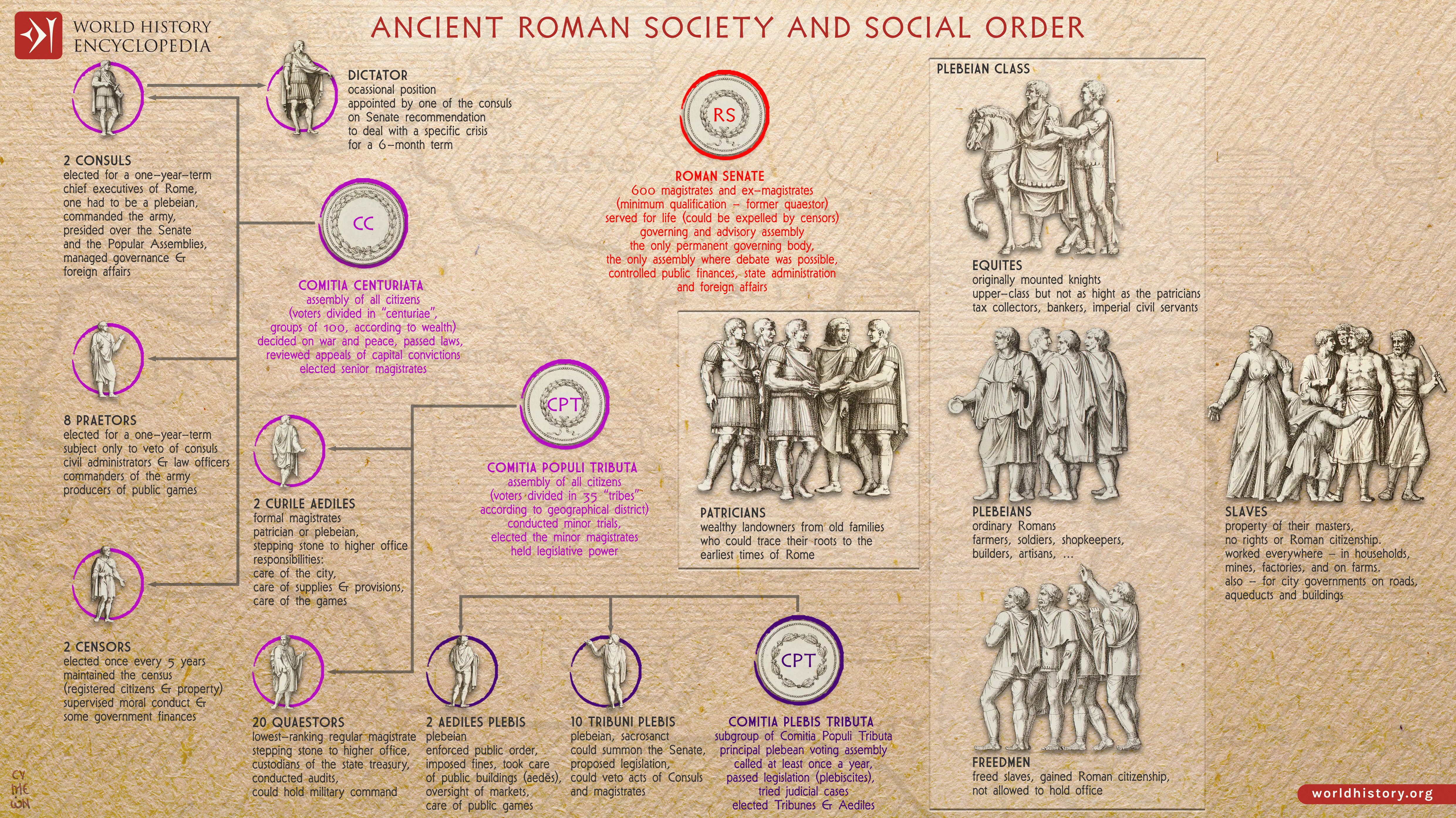
Rome is an obvious example. The Roman Republic had divided offices, annual magistrates, consuls, praetors, quaestors, censors, tribunes, assemblies, a senate, vetoes, and even a temporary dictatorship for emergencies. It was full of the sort of procedural checks people imagine will prevent tyranny.
17368.png


And yet Rome still collapsed into civil war, dictatorship, and imperial rule. Why? Because procedures do not abolish the will to power. Sinful men will use whatever structure gives them leverage. So when you say your proposed system is “the only way” to avoid creating a tyrant, you are making a claim history does not support. At most, your system changes where the danger concentrates. Every government terminates somewhere, and every terminal authority can be abused. The question is not whether a constitution can guarantee that tyranny never arises. It cannot. The question is where final earthly authority should terminate, and whether Scripture authorizes the terminal authority you are proposing.

As for responding to you entire post, there isn't any need. We've beaten this dead horse for I don't even know how long. There isn't anything new to say. I discussed the issue (briefly) with Bob, years ago, when this proposed constitution was a brand new thing and from that day to this, all anyone has been able to do is to further cement me into the position

That may explain your confidence, but it does not establish your argument. A man can become more firmly convinced because the case for his position has grown stronger, but he can also become more firmly convinced because he has stopped reconsidering the premise. “This has only further cemented me” is not an argument; it is a statement about your own settled state of mind. That is why humility matters in these discussions. Christ said we must become as little children, not childish or gullible, but humble enough to receive correction, reconsider, and not treat our settled assumptions as beyond challenge. Whether you have held this position for a long time does not answer the question on the table.

that this system of government would not produce the government it intends to create, but rather one where the people are slave to the monarch's whims.

Again, that does not follow. A king without a superior domestic removal court is not thereby a king whose every whim becomes law. His authority is limited by God’s law, by jurisdiction, and by the duties of the offices beneath him. If he commands sin, subjects must not obey. If he demands unlawful action from officers, they must refuse. If he trespasses into another jurisdiction, those within that jurisdiction must resist. What you keep calling “slave to the monarch’s whims” is really just your repeated assertion that law has no meaning unless some domestic authority can remove the king.

But that is the very point under dispute. The people are not slaves to the king’s whims simply because lesser domestic authorities lack jurisdiction to depose him. Refusal, rebuke, resistance within jurisdiction, non-cooperation, and obedience to God over man are not slavery. They are lawful responses to wicked rule. Your proposed solution does not prevent slavery to political whims. It merely changes whose whims become decisive when the highest office is contested.

The criminal code is, by far, the strongest aspect of the proposed system. Unfortunately, a king who stands in a de facto position above the law renders it largely meaningless. What is missing is any substantive check on a monarch's will to power.

I reject your premise that “substantive check” can only mean a king-removal system. There are substantive checks: God’s law, jurisdictional boundaries, lesser officers refusing unlawful commands, subjects refusing wicked orders, treasurers refusing unlawful disbursements, priests resisting trespass into priestly jurisdiction, public record, rebuke, non-cooperation, civil disobedience, and the king’s eventual death.

What is missing is not “any substantive check.” What is missing is the specific check you want: a domestic authority above the king with power to remove him. But that is the very thing under dispute. You are smuggling your conclusion into the phrase “substantive check.” A lawful restraint can be real without being a removal mechanism.

The moment a sufficiently bold king realizes he can ignore the law with impunity, the system begins its descent into tyranny. Whether that happens in a single reign or over several generations is beside the point. The outcome is essentially the same.

The same applies to any man, or group of men, within your proposed system. The moment a sufficiently bold judge, council, prosecutor, military faction, or procedural body realizes it can weaponize the law against the king (iow, ignore the law) with impunity, your system begins its descent into tyranny too. Whether that happens in a single removal proceeding or over several generations is beside the point. The outcome is essentially the same.

You have not solved the problem of the will to power. You have only moved it. A king can ignore the law under color of royal authority, and a removal body can abuse the law under color of legal authority. Both are dangers because both are made up of sinners. The difference is that your system places multiple sinners in the seat of final earthly authority, whereas mine places one: a visible, personally responsible man who can be resisted, rebuked, shown to be wrong, and called to repentance. A group of sinful men, by contrast, can diffuse responsibility, hide behind procedure, and call its ambition “the rule of law.”

The flaw lies in assuming that, because God's active restraint of Israel's kings cannot be perfectly replicated, it should not be replaced at all. In other words, the perfect becomes the enemy of the good.

No. That's a straw man. This is not a case of “the perfect becoming the enemy of the good.” It is a matter of jurisdiction. God’s active restraint of Israel’s kings was not merely a useful feature in a governmental design. It was God acting as covenant Lord over the nation He uniquely established. Men cannot simply manufacture an institutional substitute for that role and call it “good enough.”

If God removes a king, God has jurisdiction. If God sends a prophet, commissions a man, or uses a foreign nation as an instrument of judgment, God has acted. But if ordinary domestic officers claim standing authority to remove the chief civil ruler, then they are not merely “compensating” for God’s absence. They are assuming jurisdiction God did not give them. That is the issue: not whether God’s direct action can be perfectly replicated, but whether men have authority to occupy that place at all.

Rather than acknowledging the absence of God's direct oversight and compensating for it with a lawful restraint on a rogue king, the system leaves him with no meaningful check on his authority. That omission ultimately undermines the very rule of law the criminal code is intended to protect.

Again, you are smuggling your conclusion into the language.

First, ordinary nations do not lack God’s oversight. They lack Israel’s unique covenant arrangement, where God directly intervened in that nation’s royal line by prophets, covenant curses, direct judgments, and specially commissioned instruments. That is not the same thing as God being absent from ordinary nations.

Second, you have not established that your proposed restraint is lawful. Calling it “lawful” because you would write it into the system does not answer whether that mechanism is authorized in principle. A constitution can authorize something structurally wrong.

Third, the system does not leave the king with “no meaningful check” unless “meaningful check” means “a domestic authority empowered to remove him.” But that is exactly the point in dispute. God’s law, jurisdictional limits, refusal of unlawful commands, rebuke, non-cooperation, public record, civil disobedience, and the king’s mortality are all meaningful checks. What they are not is the particular check you want.

So the issue is not whether a rogue king should be “unchecked.” The issue is whether your proposed remedy creates a superior domestic authority over the king in the decisive case. And you have now admitted that it does.

 

Clete

Truth Smacker
Silver Subscriber
With this you have finally admitted that the authority enforcing the law against the king is above the king.
Finally admitted it?! I've never denied it!

Good. But that simply punts the problem up a level. If the king, who is one man, can abuse final authority, then so can the multiple men who possess final authority over the king.
Yes, that's why the men who created America, wisely created a system where there are three separate branches that each check the power of the other two. Unbelievably wise thing to do that has propelled this country well beyond any achievement that any nation before it (monarchy or otherwise) has every achieved whether they lasted for a centuries or millennia.

Judges can be corrupt. Councils can be ambitious. Prosecutors can fabricate charges. Military officers can back the faction they prefer. Legal procedures can be weaponized under color of law. Again, more evil men does not solve the problem of one evil man.
It does solve it as best as it can be solved in a system run by men. Consolidating the power into a single man that cannot be removed only makes the degradation into tyranny more efficient, permanent and devastating.

So who checks them? If your answer is “the law,” then you have not actually solved the problem, because law does not act by itself.
The problem cannot be solved the way you frame it - period. It can only be imperfectly mitigated. You seem to prefer the purest form of the insanity that is installing a king that cannot be removed no matter what damage he is doing to the country

Men apply it. If another body checks them, then that body is the higher authority, and if another body checks that body, the same question repeats. Government is not “turtles all the way down.” Eventually, every system terminates somewhere. You have not avoided final earthly authority or the problem of evil men. You have merely relocated it from the king to the domestic authority that can remove the king, and in doing so increased the number of sinful men who hold final earthly authority.


"Quis custodiet ipsos custodes?"
Who watches the watchmen?

If the law is enforced against the king by men above the king, then who enforces the law against those men when they become corrupt? If your answer is “the law,” then you have not answered the question, because law does not enforce itself. Men enforce it. And if another domestic body enforces the law against them, then that body is above them, and the same question applies again. Eventually, every system terminates somewhere.


No, it is not. If anything, the whole history of government proves that no structure devised by men eliminates tyranny. Kings, courts, legislatures, councils, mobs, military factions, and bureaucracies can all become tyrants.

Rome is an obvious example. The Roman Republic had divided offices, annual magistrates, consuls, praetors, quaestors, censors, tribunes, assemblies, a senate, vetoes, and even a temporary dictatorship for emergencies. It was full of the sort of procedural checks people imagine will prevent tyranny.
17368.png


And yet Rome still collapsed into civil war, dictatorship, and imperial rule. Why? Because procedures do not abolish the will to power. Sinful men will use whatever structure gives them leverage. So when you say your proposed system is “the only way” to avoid creating a tyrant, you are making a claim history does not support. At most, your system changes where the danger concentrates. Every government terminates somewhere, and every terminal authority can be abused. The question is not whether a constitution can guarantee that tyranny never arises. It cannot. The question is where final earthly authority should terminate, and whether Scripture authorizes the terminal authority you are proposing.


That may explain your confidence, but it does not establish your argument. A man can become more firmly convinced because the case for his position has grown stronger, but he can also become more firmly convinced because he has stopped reconsidering the premise. “This has only further cemented me” is not an argument; it is a statement about your own settled state of mind. That is why humility matters in these discussions. Christ said we must become as little children, not childish or gullible, but humble enough to receive correction, reconsider, and not treat our settled assumptions as beyond challenge. Whether you have held this position for a long time does not answer the question on the table.


Again, that does not follow. A king without a superior domestic removal court is not thereby a king whose every whim becomes law. His authority is limited by God’s law, by jurisdiction, and by the duties of the offices beneath him. If he commands sin, subjects must not obey. If he demands unlawful action from officers, they must refuse. If he trespasses into another jurisdiction, those within that jurisdiction must resist. What you keep calling “slave to the monarch’s whims” is really just your repeated assertion that law has no meaning unless some domestic authority can remove the king.

But that is the very point under dispute. The people are not slaves to the king’s whims simply because lesser domestic authorities lack jurisdiction to depose him. Refusal, rebuke, resistance within jurisdiction, non-cooperation, and obedience to God over man are not slavery. They are lawful responses to wicked rule. Your proposed solution does not prevent slavery to political whims. It merely changes whose whims become decisive when the highest office is contested.


I reject your premise that “substantive check” can only mean a king-removal system. There are substantive checks: God’s law, jurisdictional boundaries, lesser officers refusing unlawful commands, subjects refusing wicked orders, treasurers refusing unlawful disbursements, priests resisting trespass into priestly jurisdiction, public record, rebuke, non-cooperation, civil disobedience, and the king’s eventual death.

What is missing is not “any substantive check.” What is missing is the specific check you want: a domestic authority above the king with power to remove him. But that is the very thing under dispute. You are smuggling your conclusion into the phrase “substantive check.” A lawful restraint can be real without being a removal mechanism.


The same applies to any man, or group of men, within your proposed system. The moment a sufficiently bold judge, council, prosecutor, military faction, or procedural body realizes it can weaponize the law against the king (iow, ignore the law) with impunity, your system begins its descent into tyranny too. Whether that happens in a single removal proceeding or over several generations is beside the point. The outcome is essentially the same.

You have not solved the problem of the will to power. You have only moved it. A king can ignore the law under color of royal authority, and a removal body can abuse the law under color of legal authority. Both are dangers because both are made up of sinners. The difference is that your system places multiple sinners in the seat of final earthly authority, whereas mine places one: a visible, personally responsible man who can be resisted, rebuked, shown to be wrong, and called to repentance. A group of sinful men, by contrast, can diffuse responsibility, hide behind procedure, and call its ambition “the rule of law.”


No. That's a straw man. This is not a case of “the perfect becoming the enemy of the good.” It is a matter of jurisdiction. God’s active restraint of Israel’s kings was not merely a useful feature in a governmental design. It was God acting as covenant Lord over the nation He uniquely established. Men cannot simply manufacture an institutional substitute for that role and call it “good enough.”

If God removes a king, God has jurisdiction. If God sends a prophet, commissions a man, or uses a foreign nation as an instrument of judgment, God has acted. But if ordinary domestic officers claim standing authority to remove the chief civil ruler, then they are not merely “compensating” for God’s absence. They are assuming jurisdiction God did not give them. That is the issue: not whether God’s direct action can be perfectly replicated, but whether men have authority to occupy that place at all.


Again, you are smuggling your conclusion into the language.

First, ordinary nations do not lack God’s oversight. They lack Israel’s unique covenant arrangement, where God directly intervened in that nation’s royal line by prophets, covenant curses, direct judgments, and specially commissioned instruments. That is not the same thing as God being absent from ordinary nations.

Second, you have not established that your proposed restraint is lawful. Calling it “lawful” because you would write it into the system does not answer whether that mechanism is authorized in principle. A constitution can authorize something structurally wrong.

Third, the system does not leave the king with “no meaningful check” unless “meaningful check” means “a domestic authority empowered to remove him.” But that is exactly the point in dispute. God’s law, jurisdictional limits, refusal of unlawful commands, rebuke, non-cooperation, public record, civil disobedience, and the king’s mortality are all meaningful checks. What they are not is the particular check you want.

So the issue is not whether a rogue king should be “unchecked.” The issue is whether your proposed remedy creates a superior domestic authority over the king in the decisive case. And you have now admitted that it does.
The rest is just a regurgitation of the same arguments we've been throwing back and forth for months.

Nothing you say seems to even touch on the point. You want to pretend like God has jurisdiction in a system that He is not involved in and you acknowledge that He would not involve Himself in it. I do not understand how to get you to see the contradiction in that. Nothing I say penetrates.

The system as proposed would produce a tyrant, pure and simple. You don't even deny that and yet you somehow believe that it's the best we can do! That will NEVER make any sense to me! Indeed, you have nearly convinced me that, without God being directly involved, a monarchy cannot be made to work at all, no matter what. At the very least, it is no better than nearly any other system anyone cares to devise so long as the criminal code and code of use is based on real justice.
 
Top