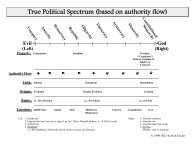
How is making it so that an evil king has legal carte blanche to do whatever he wants not an even shorter road to tyranny?
You are still treating tyranny of an evil king as the only danger. I'm saying there are greater dangers than that.
Yes, the king may become a tyrant. Yes, the fact that the king cannot be lawfully removed by another earthly office may result in tyranny. I am not denying that danger. It's even acknowledged as part of the system.
The problem is that your proposed alternative does not avoid tyranny. It opens the door to something beyond the tyranny of one man.
"The cure is worse than the disease," as Bob used to say.
The disease is an evil king, and that is bad enough. But the cure you are proposing creates a standing mechanism by which the one can be overthrown by the few, even if the few are not themselves part of the removal mechanism.
A wicked king is visible. He is personal. He is mortal. His reign can be named, remembered, condemned, resisted, and judged by history. And, at the very least, he will eventually die.
But a corrupted removal mechanism is different. It can become institutional. It can outlive the men who first created it. It can learn, adapt, recruit, build precedent, hide behind procedure, and pass its corruption from one generation to the next. Worse, it can make rebellion look lawful.
That does not halt the danger Polybius described. It resumes it. The one is replaced by the few, the few eventually become an oligarchy, and the cycle starts turning again.
If the king has no meaningful influence over the removal mechanism, then he becomes subject to the men who control that mechanism. At that point, the king, evil or not, rules only so long as they permit him to rule. That makes him a puppet.
But if the king does have meaningful influence over the removal mechanism, then the mechanism is powerless against him. A wicked king will simply shape it, control it, intimidate it, or use it against the very men who threaten his rule, from the very moment he learns of its existence.
There is no stable middle ground here. Either the king eventually becomes a puppet of the system created to remove him, or the system becomes a tool of the tyrant king.
That is why I keep saying the danger is not merely “an evil king.” The danger is what happens when the proposed cure creates the next stage of decay. A removal mechanism does not merely answer tyranny; it risks advancing the process Polybius described. The one is replaced by the few, again, even if they aren't formally part of the process and the few eventually become an oligarchy, even if there remains a king on the throne.
So Bob’s Constitution does not pretend an evil king is impossible. Rather, it refuses to build the next stage of anacyclosis into the system. If the king becomes evil, that is a grievous thing. But at least he remains one visible, mortal, historically accountable man. He will die.
The judiciary would not be able to remove the king by fiat or whim over a long weekend. The process for removing the king would be legally complex thing to do that would require much more than some particular person deciding that he wanted to make a power move on the king.
But that is not a point in its favor.
The fact that the process would be legally complex is all the more reason to avoid it. Justice, when brought, should be swift and painful. Complexity adds time, and time gives evil room to organize, manipulate, threaten, flatter, bribe, redefine terms, build coalitions, and wait out opposition.
The forces of evil are very patient. And I do not mean only evil men. Spiritual forces do not have to worry about dying, aging out, losing interest, or failing to see the long game through. Men die. Institutions can outlive men. And the spiritual powers that exploit those institutions are more patient still.
A complicated judicial removal process would not merely be a safeguard against rash action. It would also become a target for patient men who know how to use institutions. The judiciary is just as subject to corruption and influence as the king is, and perhaps even more useful to evil if it can be used as a lawful-looking tool to remove a righteous king from power.
Have you ever heard of the long march through the institutions?
That is the danger here. Evil does not need to seize the throne in one dramatic act if it can slowly capture the mechanism that controls the throne. It can work through credentials, appointments, promotions, professional respectability, procedural precedent, and institutional culture.
And this is not hard to imagine. Our current government already shows how much power can be exercised by people and interests that do not openly hold the highest office. They influence the bureaucracy, the courts, the agencies, the money, the media, and the institutions that shape what government actually does and even how the people perceive it.
So why assume the same kind of forces would not eventually form around a king-removal mechanism?
If such a mechanism exists, then every ambitious faction knows exactly where to aim: not necessarily at the crown, but at the process that can remove the crown. Capture that, and you can remove a good king while claiming to defend the law.
So, no, the fact that it would not happen “over a long weekend” does not comfort me. The more complex the process, the more institutional it becomes. And the more institutional it becomes, the easier it is for patient evil men to capture over time.
Also, the result would simply be another king, not the judiciary being installed as some sort of governing committee.
This is technically true, but it misses the point.
The danger is not only that the judiciary might install itself as a governing committee. The danger is that a removal mechanism gives evil men a lawful-looking way to remove an unusually righteous king.
Evil hates the good. It hates the righteous. It hates the upright. So imagine a genuinely good king, one who resists corruption, refuses flattery, cannot be bribed, will not bend to institutional pressure, and will not permit evil men to use his government for their own ends.
What would evil do?
It would not necessarily need to install one of its own men directly. It would only need to remove the man standing in its way.
Yes, under the proposed succession process, especially if a lottery is involved, the conspirators may not be able to directly choose the next king. But that does not mean the removal is harmless. The odds are very good that the next king will not be as principled, as resistant, as wise, or as difficult to manipulate as the one they removed.
So the replacement does not have to be their hand-picked puppet in order for the removal to serve evil. Evil can profit simply by taking down a righteous king and rolling the dice on someone weaker.
That is one of the forms of decay this constitution is trying to prevent, or at least slow down as much as possible.
A removal mechanism does not merely threaten evil kings. Over time, it also threatens the very kings most likely to resist the institutional forces trying to corrupt the nation.
A rather simple conflict of interest clause in the statute is all it would take to prevent a rogue judiciary from taking over. Simply make it part of the removal process that no member of the judiciary can be elevated to king as a result of a king being legally removed from his throne.
That only answers a very narrow version of the objection.
I am not arguing that the judiciary will formally take over the government or that one of the judges will remove the king and then personally become king. That would be the most obvious and least subtle abuse.
The deeper problem is that whoever controls, captures, influences, or intimidates the judiciary will use whatever tools are available to gain power and destroy what is good.
That could be men within the judiciary. It could be powerful interests outside the judiciary. It could be a faction operating from the shadows. It could be, ultimately, Satan himself working through whatever instruments are available.
The point is not that the judges must personally wear the crown. The point is that the removal mechanism becomes a weapon. Once that weapon exists, evil has an obvious target: capture the men who control it, and then use it against any king who stands in the way.
A conflict-of-interest clause might prevent a judge from becoming king after a removal. Fine. But it does not prevent the judiciary from being used to remove a righteous king, destabilize the throne, intimidate future kings, create precedent, or clear the way for someone weaker, more corruptible, or less resistant to evil.
Evil does not need a judge to wear the crown. It only needs the judge to remove the man who refuses to bow.
So the danger is not simply “the judiciary takes over.” The danger is that the judiciary becomes the lever by which others take over.
The king, on the other hand, could go totally rogue and do whatever he desired without consequence or recourse, precisely because, despite what you say, he absolutely does have the legal right to violate the law. He may not have a moral right to do so but he surely would have a legal right to do so because he cannot be prosecuted for any reason whatsoever. For such a king, all things would be lawful, whether they were beneficial or not, precisely because he has been installed above the law (so far as the law itself is concerned).
No, he would not have the legal right to violate the law.
You are confusing the absence of a superior earthly prosecutor with legal permission.
Just because the king can do something does not mean he has the right to do it. And just because no higher earthly office can prosecute him does not mean he is not accountable at all.
My position is not that the king is “installed above the law,” regardless of how you frame it. He is under the law. He is bound by the Constitution and Criminal Code. If he violates them, he acts unlawfully.
The issue is not whether his conduct is lawful. It is not.
The issue is whether there is a superior earthly civil office with jurisdiction to prosecute him.
Those are different questions.
A man may be guilty before God and before the law even when no earthly court has authority to punish him. That does not make his evil lawful. It means his accountability is not administered by a superior domestic tribunal.
So no, “all things” would not be lawful for the king. If he breaks the law, he breaks the law. The question is not whether he is above the law. The question is whether creating a higher earthly court over him destroys the monarchy by making that court the final earthly authority.
And I reject the notion that having a legal means by which a rogue king can be removed without the need for civil war, means that the judiciary is now somehow the highest authority such that all I've done is shifted the problem over to someone new. That just is not the case.
It is the case, whether you accept the description or not, because that is how authority works.
If the judiciary can indict, try, condemn, remove, and replace the king, then in that matter the judiciary is above the king. It does not matter that the authority is limited to removal. It does not matter that it is legally defined. It does not matter that it is only used in extraordinary circumstances.
At the decisive point, the judiciary has authority over the throne.
That means final earthly jurisdiction has shifted from the king to the body that can decide whether he remains king.
Authority flows downhill. If the judges beneath the king can remove the king, then authority is flowing uphill. Calling that “legal means” does not change the direction of authority.
And I am not saying this necessarily makes the judiciary the day-to-day governing committee. That is not the point. The point is that it makes the judiciary the final earthly authority over the office of king.
Whoever has final authority over the throne is above the throne.
First, as I just explained, the judiciary could not arbitrarily do anything to the king.
But “not arbitrary” is not the same thing as “not corrupt.”
The danger is not merely that the judiciary might wake up one morning and remove the king on a whim. The danger is that a captured or corrupt judiciary could remove a righteous king through a lawful-looking process, using the very procedures designed to restrain abuse.
Plenty of evil is done non-arbitrarily. It is done carefully, procedurally, with paperwork, precedent, witnesses, hearings, findings, and official language.
That is exactly what makes institutional corruption so dangerous. It does not have to look like a coup. It can look like due process.
So the question is not whether your proposed process would be arbitrary. The question is whether it can be captured, corrupted, or weaponized over time. And if it can, then the fact that it is procedural does not comfort me.
Second, as I also explained, there'd be no incentive to remove a good king because they'd not be allowed to profit from his removal.
That's naïve, Clete.
The fact that he is a good king is incentive enough for evil to remove him.
That IS the profit.
A righteous king restrains wicked men. He blocks corrupt schemes. He refuses bribes. He resists flattery. He punishes crime. He exposes what others want hidden. He prevents institutions from being used for evil ends.
So if evil men, corrupt interests, or spiritual forces cannot control him, they have every incentive to remove him.
They do not need to personally become king in order to profit. They profit by removing the obstacle.
And even if the next king is chosen by lottery, that does not eliminate the incentive. The next king does not have to be hand-picked by them. He only has to be weaker, less wise, less principled, less experienced, more fearful, more corruptible, or more susceptible to influence than the good king they removed.
So yes, there is incentive to remove a good king.
The incentive is that he is good.
In addition to that, the authority to remove is the only authority the judiciary would have over the king. They cannot use this authority to do anything other than to initiate proceedings to have the king legally removed for cause. Cause that they'd have to prove in court.
But that “only authority” is exactly the authority evil would need to capture.
If the judiciary has power to initiate proceedings against the king and remove him for cause, then the obvious target for anyone seeking power is the institution that defines, evaluates, and proves “cause.”
A captured judiciary does not need broad governing power. It only needs control over the one process that can remove the king.
And once the institution is captured, the requirement to “prove cause” is not the safeguard you think it is. The captured court only needs enough evidence, or apparent evidence, to justify what it already wants to do.
False witnesses exist. Manufactured evidence exists. Selective presentation of facts exists. Procedural abuse exists. Public pressure exists. And if the institution is already corrupt, it is not going to look very hard for reasons to acquit the king it wants removed.
That is the danger.
The process does not have to be arbitrary. It does not have to be openly lawless. It only has to be captured. Once captured, it can remove a righteous king while claiming to have proved cause in court.
There's no way for them to turn this authority into an ability to govern the nation. They cannot do any of the things a king does as the sovereign of a nation and so they'd have no means to become tyrannical.
Again, I think this underestimates how power works.
They do not need to formally govern the nation in order to control the direction of the nation.
If the judiciary can remove the king, then every king knows he rules under the shadow of that power. The judiciary does not have to command the military, levy taxes, manage infrastructure, or issue daily orders in order to influence what the king does. It only has to make clear what kind of king will be tolerated.
That is more than enough.
Power does not always operate by openly taking the throne. Sometimes it operates by controlling the conditions under which the man on the throne is allowed to remain there.
A captured judiciary could pressure a king, intimidate him, chill his willingness to act, punish him for resisting institutional agendas, or remove him if he refuses to bend. Then the next king learns the lesson.
That is rule by threat, not rule by title.
So no, the judiciary may not become tyrannical in the same way a king can. It would not look like one man issuing royal decrees. It would look like an institutional class shaping the behavior of every king through the standing threat of removal.
That is still tyranny. It is just less visible.
The only thing that would happen if one king is removed is that another king is selected. The means by which the replacement is selected would be delineated far in advance by the same law that gives the judiciary the authority to have removed the one being replaced.
But as I already addressed above, sometimes simply removing a good king is all evil needs.
The replacement does not have to be hand-picked by the conspirators in order for the removal to serve their ends. If the current king is unusually righteous, unusually resistant to corruption, and unusually difficult to manipulate, then removing him is already a victory for evil.
Another king may be selected, yes. But “another king” is not necessarily an equal replacement. He may be weaker, less wise, less principled, less experienced, more fearful, more corruptible, or more susceptible to pressure.
So the fact that the succession process is written in advance does not solve the problem. The danger is not only who gets installed next. The danger is that the removal mechanism gives evil a lawful-looking means to remove the very sort of king most likely to slow the nation’s decay.
The issue is not whether a replacement process exists on paper. The issue is what kind of power the removal mechanism creates in practice. If evil can use that mechanism to remove the very king resisting it, then the cure has become another path to the same national decay we're trying to avoid.